Tips On Driving In France
Driving in France is not difficult. For one thing you drive on the
right hand side of the road. If you're used to the left it will be a bit of a learning curve. (I’ve gone over many a curb in Scotland in
the beginning)
In France they drive fast. Not as aggressive as the Italians but more aggressive than the Beligans.
What You'll Need
- For a trip less than 90 days, you'll need your valid
drivers license from your home country.
- Your passport. (In
France you must have ID on you at all times).
- You must be at least 18 years of age.
Driving in France – the basics
Priorité a doite: vehicles entering from the right have the right of way.
This is very important. For example: if you're on a through road and there's a road entering on the right, if they don't have a stop sign, that vehicle has the right of way. You must yield to that entering car. (we've had many a honks from irate drivers until we finally got it)
- Not On Roundabouts: those in the circle have the right of way. Tip: Once you get in, if you don’t know where you’re going it’s safest to stay in the left lane and circle around and around until you see what exit you want, then get into the outer lane where you can exit.
Pass on the left.
Flashing lights means the driver is claiming the right of way.
Bringing your own car to France?
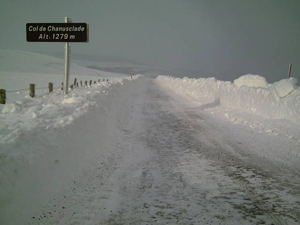
If you bring your car from the UK there are certain things you have to do to make the car adaptable to driving in France. And since you live so close you are the lucky ones. You need a Warning triangle (excludes motorcycles), Reflective jackets (EN471) - one reflective jacket in the vehicle. This does not apply to drivers of two-wheeled and three-wheeled vehicles. And, if you’ll be driving in snow and the signs indicate, snow chains. Best to check with your automobile association like AA to double-check what else you may need.
Renting a car
If you fly into Paris or other major city airports there are all the national car rental agencies.
We've learned a lot about car rentals in France from experience and have ironed out the kinks.
Now you have your car and off you go driving in France.
Gas Vs. Diesel
Diesel is cheaper than gas. If you rent a car, paying the extra
for a diesel car rental will save you money in the end because of your
savings on gazole (diesel) plus the car gets better mileage.
The Autoroutes (highways)
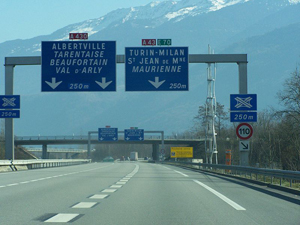
Armed with a good road map of France (we've found the best ones) you take the autoroute à péage, the interconnecting link of main highways that go throughout France. The autoroutes are great, smooth, fast, have a lot of rest areas and emergency telephones and help make driving in France stress free. And you pay for it, that’s what péage means. By American standards the tolls are very expensive. For example, Paris to Rennes tolls = approximately 27 Euros. That’s for 350 kilometers of road (about 219 miles).
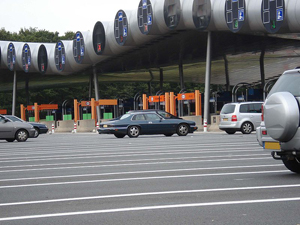
Autoroute tolls
Driving in France you get a ticket as you join the roadway and then pay for your distance traveled when you exit. There are attendants at the booths or you can pay at a machine. The machine takes coins (will give you change) or credit cards. At a few autoroutes you pay when you enter, not when you exit.
In the Region of Brittany however there are no tolls! This is due to a law from hundreds of years ago.
When you’re not on the autoroute the roads are free. They are the route nationals (major roads) that link major towns, or routes départementals (minor roads), which are usually more scenic.
Driving in France Distances:
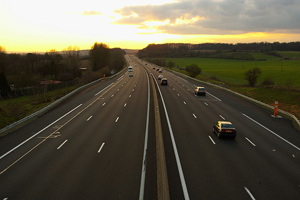
Paris to Brittany
The quickest route to Brittany from Paris are to Rennes:Take the
autoroute A11 to LeMans then the A81 to Rennes. Should take about 4
hours.
30 minutes longer To Nantes, (still Brittany as far as Bretons’ are concerned) take the A11 all the way. Driving time about 4 ½ hours
Traffic
In the summer (mid July through August) routes out and into Paris can get very congested especially on the weekends and at the
end of a holiday. We spent a long time coming back from our August
cottage rental in
Brittany sitting in a long line at the autoroute ticket booth at
the Brittany border with all the other summer holiday folks (rentals
almost always go from Saturday to Saturday) To avoid the traffic leave
in the morning like my brother-in-law did, and you'll have no delay.
Also coastal resort towns during the summer will have traffic at the end of the day when folks are leaving the beach and during business rush hour. Most of Brittany is so rural there is little traffic away from major cities.
Speed limits
Autoroutes: 130 km/h (80mph), in rain 110km/h (70 mph)
Divided highway (aka dual carriageway): 110 km/h, in rain 90-100 km/h
Other roads: 90 km/hr, in rain 80 km/h
Towns: 50km/hr unless marked otherwise.
When driving in France just remember to obey stop signs, speed limits and use commons sense. Steep fines, confiscation of your vehicle or even prison is possible (for drunk driving for example). In France you're guilty until proven innocent!
If you drive over the speed limit you may get a fine. No, a cop may not stop you. What you get is the ticket in the mail with the fine to be paid by you.
Buying Gas
Buying gas is easy, just like at home more or less. You pump your own and pay when you’re done. Just tell the attendant your pump number.
You can pay
with cash or a credit card that has a chip in it. Most of us here in
the States do not have a chip card. If you have no chip card make sure you're
at a gas station where there is an attendant. The autoroutes have
attendants 24 hours but not so elsewhere.
The cheapest place to buy gas is at the big supermarkets (supermarché) such as Auchan, InterMarche, E. Leclerc, Round Point, Super U, and ATAC, which will be off the autoroute in the “center commercial” of a town. Look for the signs.
Choices at the Pump
Essense:
Sans plomb (unleaded gas)
Super (super unleaded gas)
Gazole (diesel)
All sold by the liter (1 liter = 1.0556 gallons)
Do not buy what’s called Fuel. It’s usually sold at a separate pump and is for farmers only.
Parking
During the summer month’s coastal towns in Brittany are very crowded.
Most larger towns however have a central car park where you pay and
display (horodatteur). Villages have free central parking areas. However,
it also depends on the size of the village and its tourist
attractiveness. In August we went into the town of Pont Aven. It was
the afternoon, not a space to park anywhere so we left and came back for
dinner when everyone had left. In September there is always plenty of
places to park.
On the Riviera in September we had plenty of parking. In summer but it’s very tight on parking since it’s the #1 vacation spot in France (Brittany is #2)
Self Pay Lots
Some parking lots you pay for however long you think you'll need. If you're away longer and your time expired you might find a ticket in your mailbox at home a few months later.
Bringing Your Own Car?
If you're lucky to live close to France and bring your own car here's a great checklist of things you need to bring when driving in France. The checklist is update all the time with the latest rules and regulations. David Griffiths provides this very useful information on his website: www.drive-france.com/checklist/
Driving in France is a great way to see the country at your own pace doing what you want when you want and I heartily recommend it.
article photos courtesy Creative Commons
Copyright ©2024 by Deborah Dutton, French-Culture-Adventures.com
All rights reserved
Search This Site:

Sign up for my Free Newsletter!
Paris Vacation
Apartment Rentals

More Apartment Rentals in Paris


